What am I going to learn in Science?
Year One
Autumn 1: Human Body
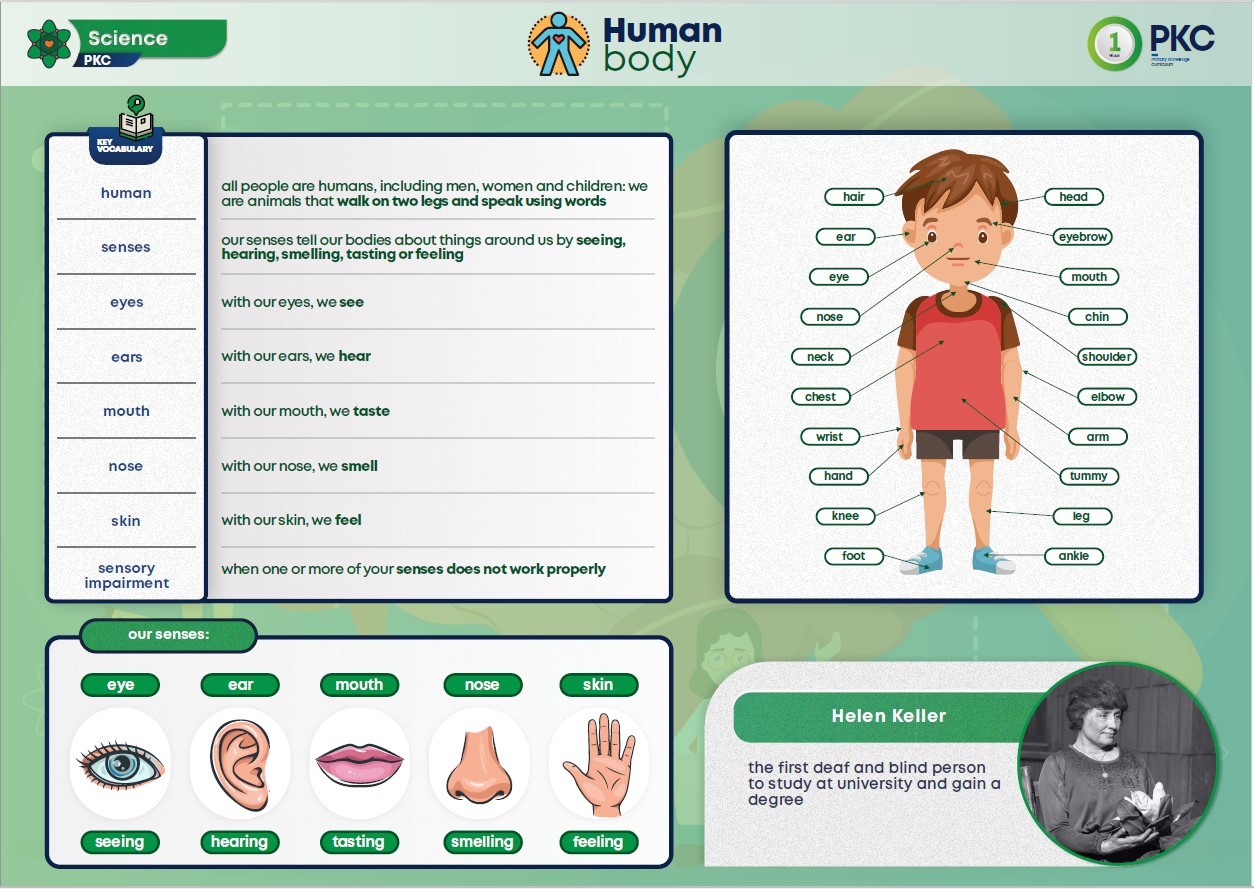
This unit reconnects to prior learning by looking at the parts of the human body and their functions. Children then move on to study the eye in more detail, learning that scientists look closely at things to find out how they work. This is important disciplinary understanding that will grow as children progress through the curriculum. They will understand that light travels into our eyes which helps us to see. Children then progress to find out more about our ears, how we hear and the importance of hearing. Touch, taste and smell are studied, and children will begin to understand that our senses help us to process what is happening around us, helping us to be aware of the world we live in. Children will consider the role of our senses in protecting us from danger. Children will work scientifically in this unit, exploring senses and experiencing how we use them.
Year Two
Autumn 1: Human Body
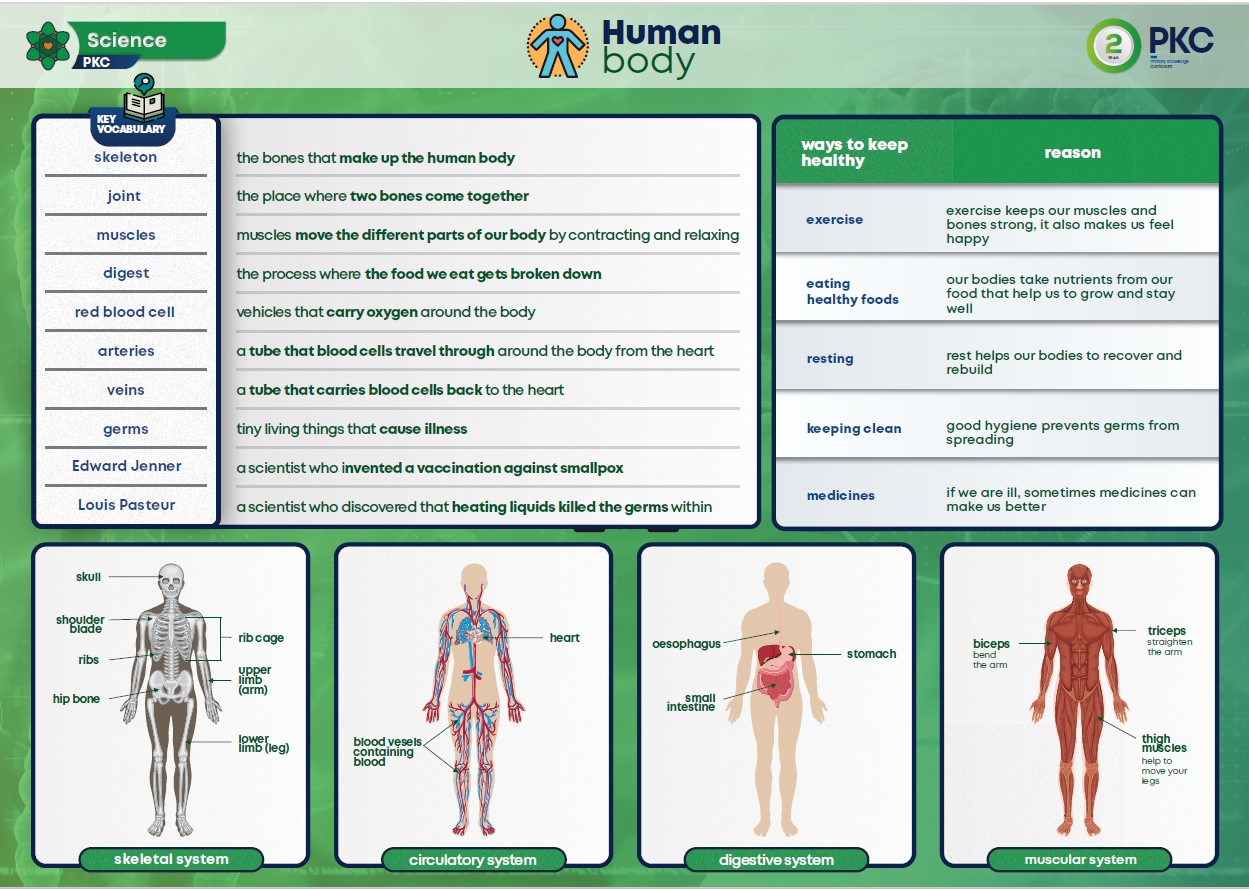
Building on their understanding of the human body and senses from Year One, this year children will look at some systems that operate within our bodies, including the skeletal system, the muscular system, the digestive system and the circulatory system. Children will begin to understand the important scientific concept of interconnection and will recognise that a system is a group of parts that work together, in a connected way, to create a function. Children will learn that our skeletons give our body shape, protect vital organs and help us to move. They will look at the shape of different bones in our body and begin to recognise their function. Children will also recognise that muscles have many important roles within our body, helping us to move and holding our skeletons together.
Year Three
Autumn 1: Human Body
In Year 2, children learned about our muscular system and the role muscles play in helping us move. Building on this knowledge, in Year 3, children will learn about voluntary and involuntary muscles and their purpose. They will learn that some muscles, like our heart, move without us consciously thinking about it, but other muscles require us to command them to move. Moving forward with their understanding, children will look in more detail at the skeletal system, building on prior knowledge and elaborating through studying names of bones, joints and their function.
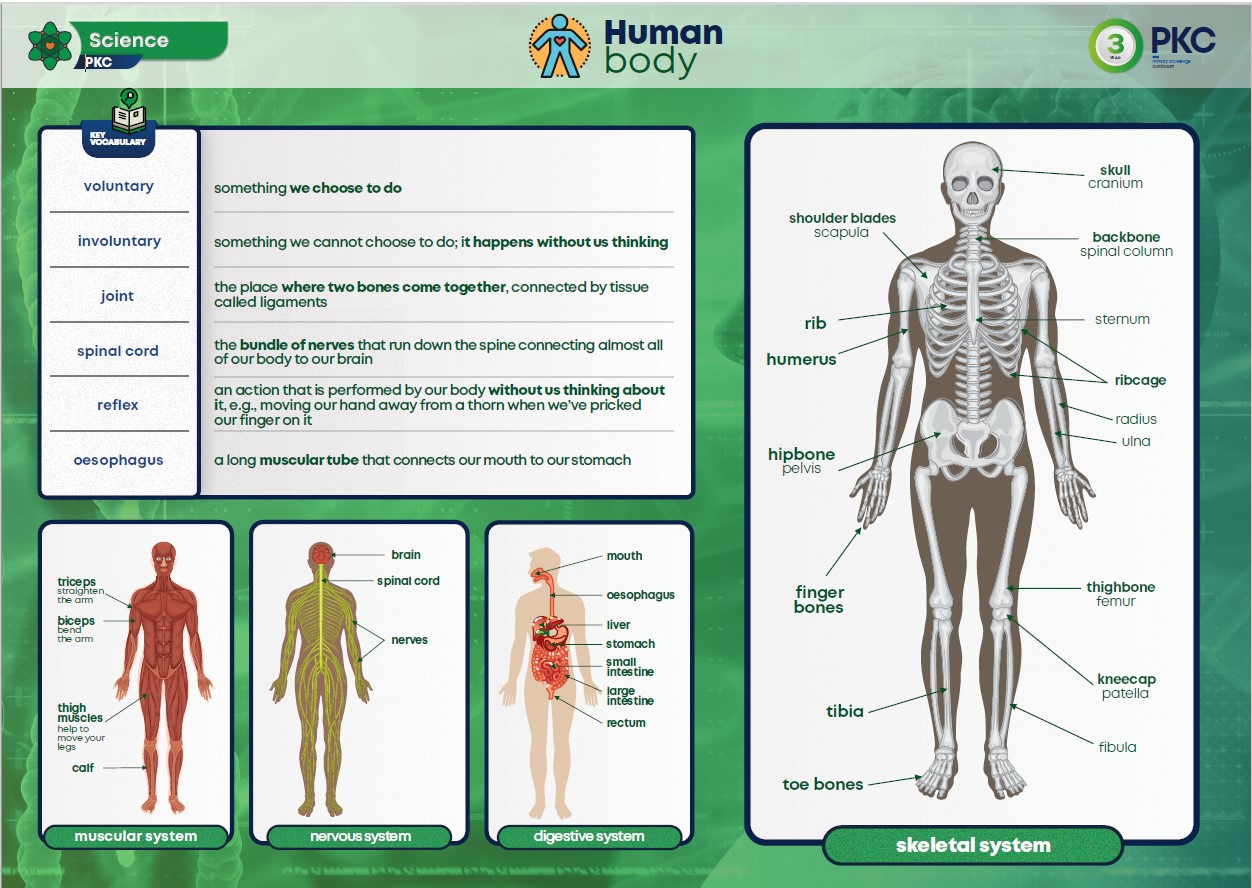
Year Four
Autumn 1: Human Body
This unit introduces cells as the building blocks that all living things are made of. Children will learn that cells inside our bodies make up tissue (e.g. muscle), which make up organs, which function in systems within our bodies. This unit explains digestion in much more detail than previously learned, but holds the understanding of cells alongside this, so that children can begin to understand there is much going on at microscopic level. The concept of nutrients within foods will be better understood when children know that there are very tiny things we cannot see around us.
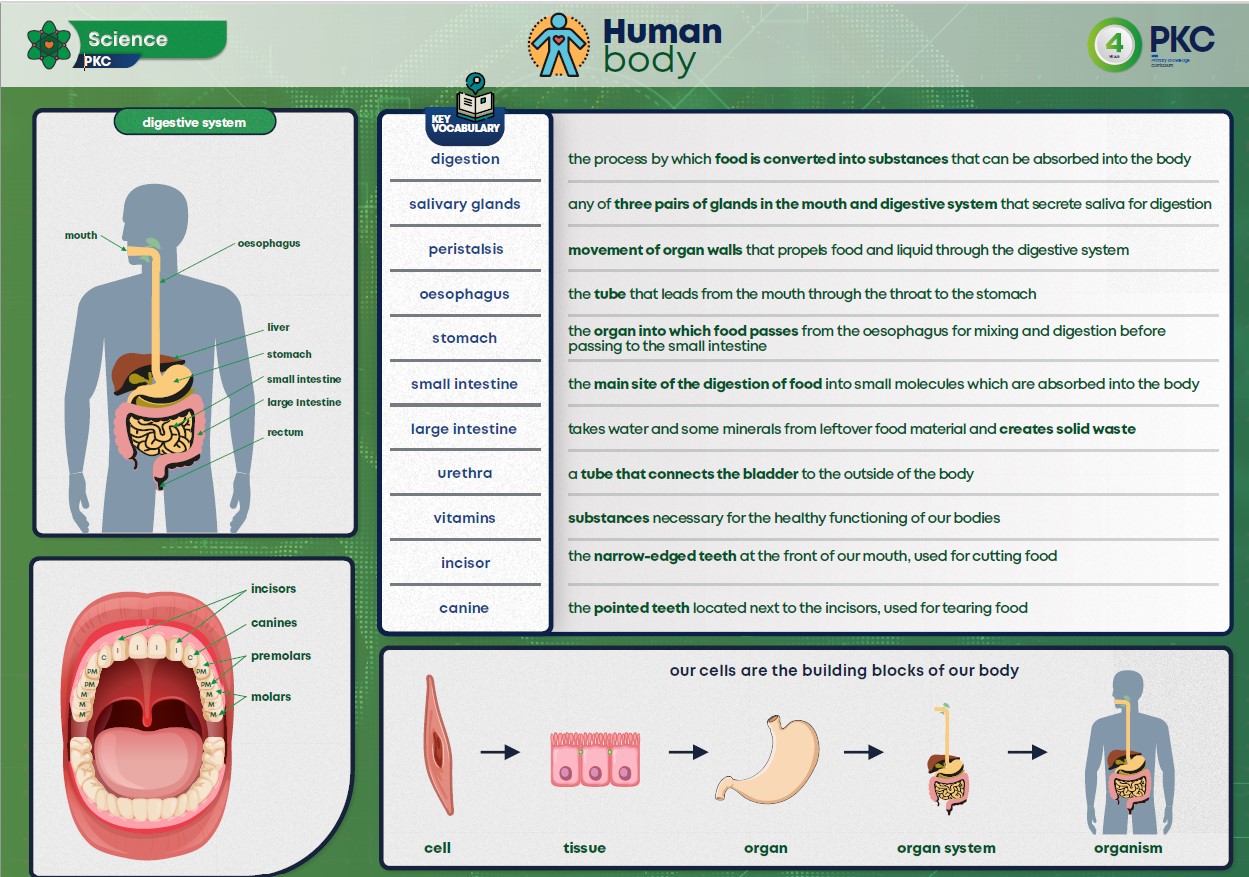
Year Five
Autumn 1: Human Body
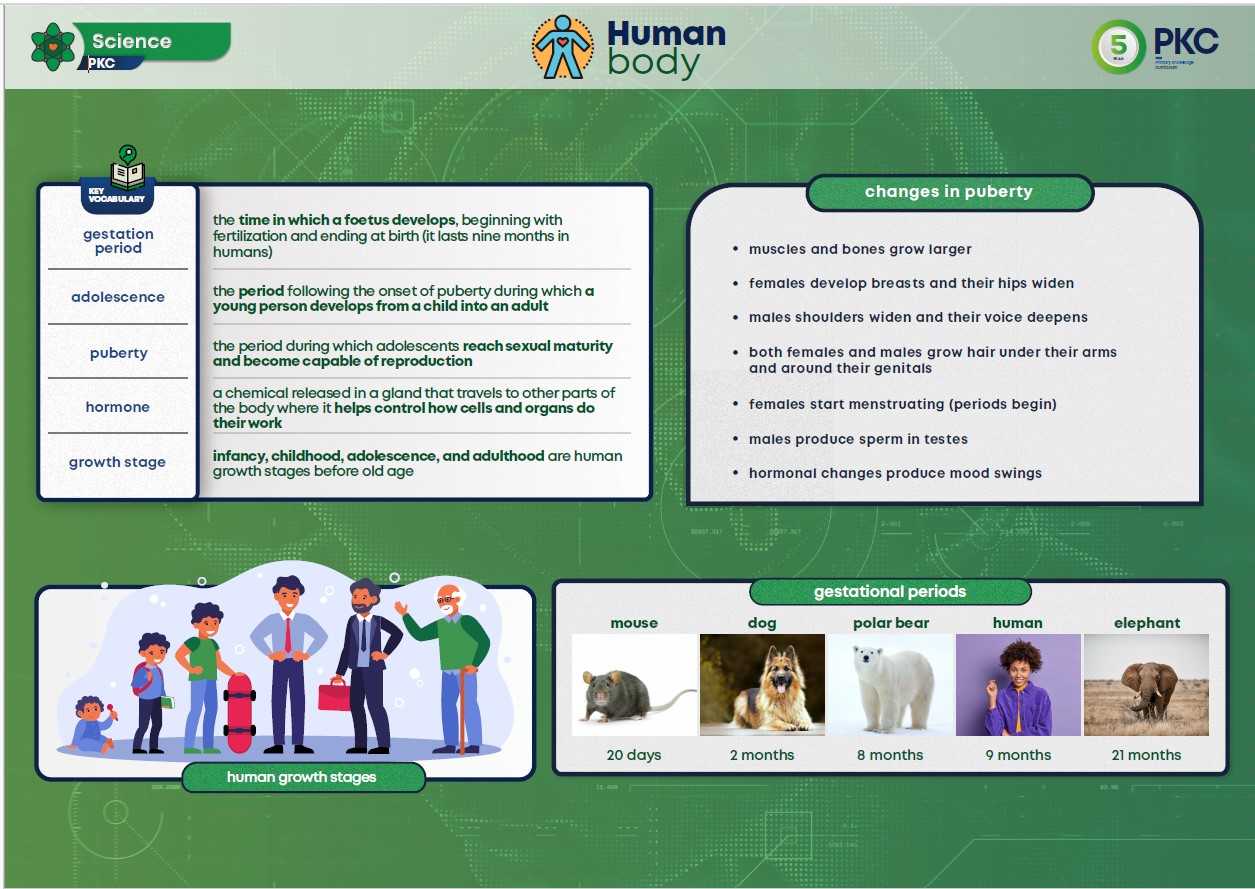
In this unit, children will deepen their understanding of meteorology: the study of the weather. Building on the children’s existing knowledge, this unit will focus on weather, climate, atmosphere and forecast. The disciplinary knowledge gained in this unit allows the children to think more like meteorologists, using data and diagrams to deduce and draw logical conclusions.
Year Six
Autumn 1: Human Body
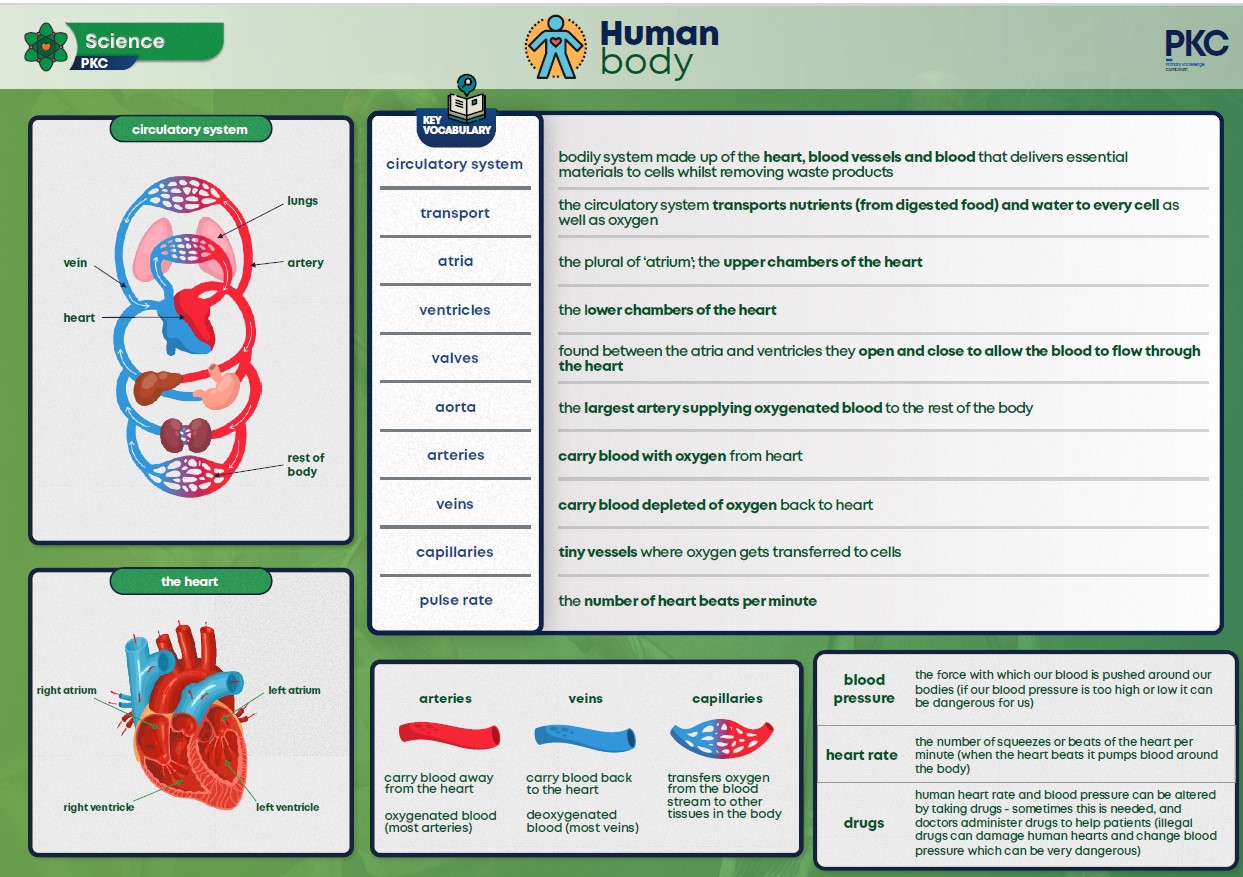
During this unit children will build on their knowledge of the circulatory system from Year 2. They will learn that William Harvey was a doctor who suggested the heart was at the centre of a circulatory system that moved blood around the body. They will learn that now; scientists and doctors know that the heart and blood vessels are parts of our circulatory system and that our circulatory and respiratory systems keep us alive. We know that our heart is divided into four chambers and blood enters and exits the heart. As the heart beats, it pumps the blood out to the lungs for a new supply of oxygen. Blood vessels, called arteries, carry oxygen-rich blood away from the heart. Blood vessels, called veins, carry blood back to your heart to be pumped to the lungs for more oxygen. Children will learn the importance of each part of the circulatory system including arteries, veins and capillaries.